
- Hits: 91
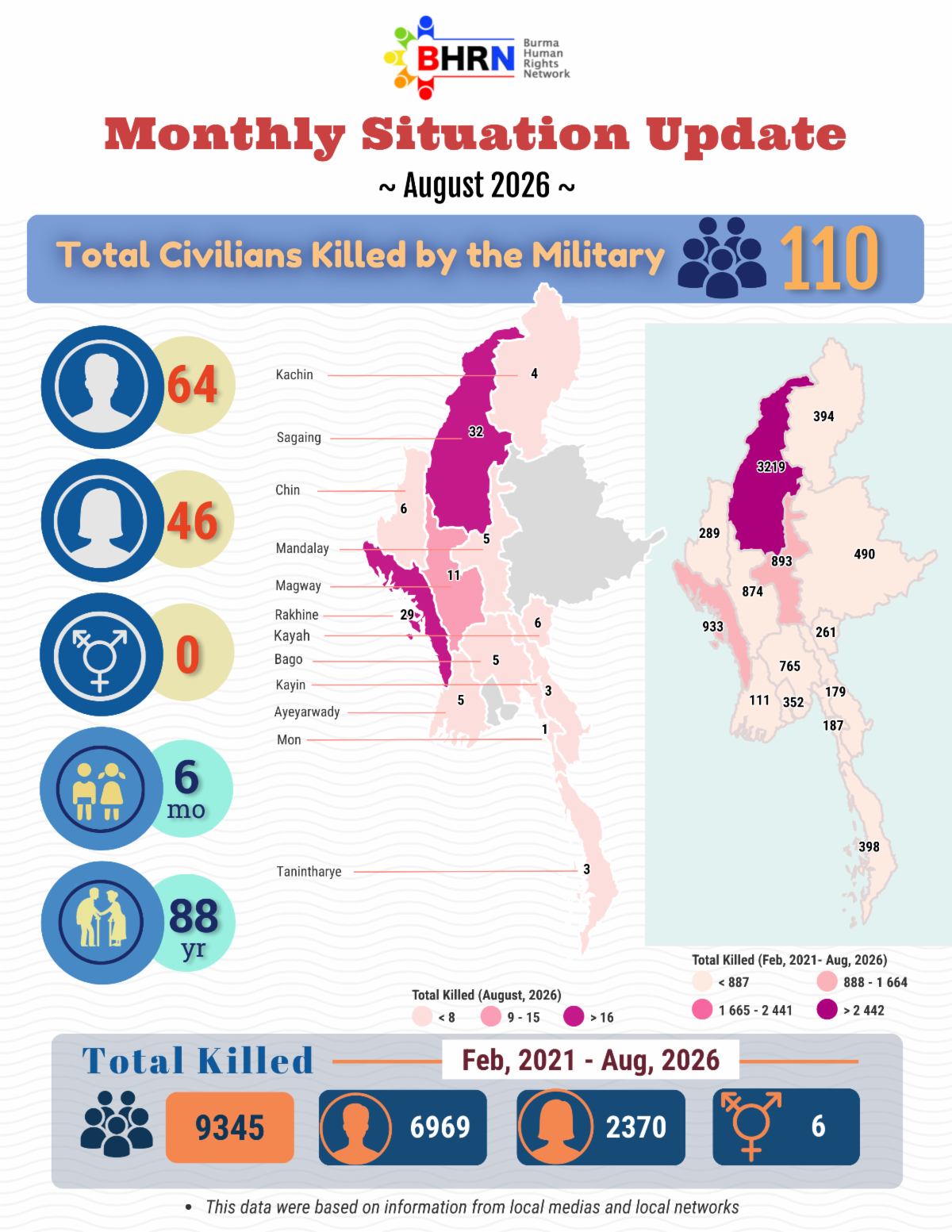
In August, Myanmar military forces carried out airstrikes, drone and gyrocopter attacks, artillery fire, village burnings, forced recruitment, and restrictions on humanitarian assistance across multiple states and regions. Civilians were killed in homes, displacement sites, monasteries, hospitals, and villages under resistance or ethnic armed organisation control. On 21 August, a Myanmar Air Force jet bombed a Buddhist monastery during a meditation retreat in Myaung Township, killing 14 people and injuring around 20. On 24 August, two military fighter jets bombed a Buddhist monastery housing a primary school in Paletwa Township while children were in class, killing five civilians, including two children, and injuring 17 others, including nine children.
Read more: August 2026 - Summary of Monthly Situation Update
- Hits: 153
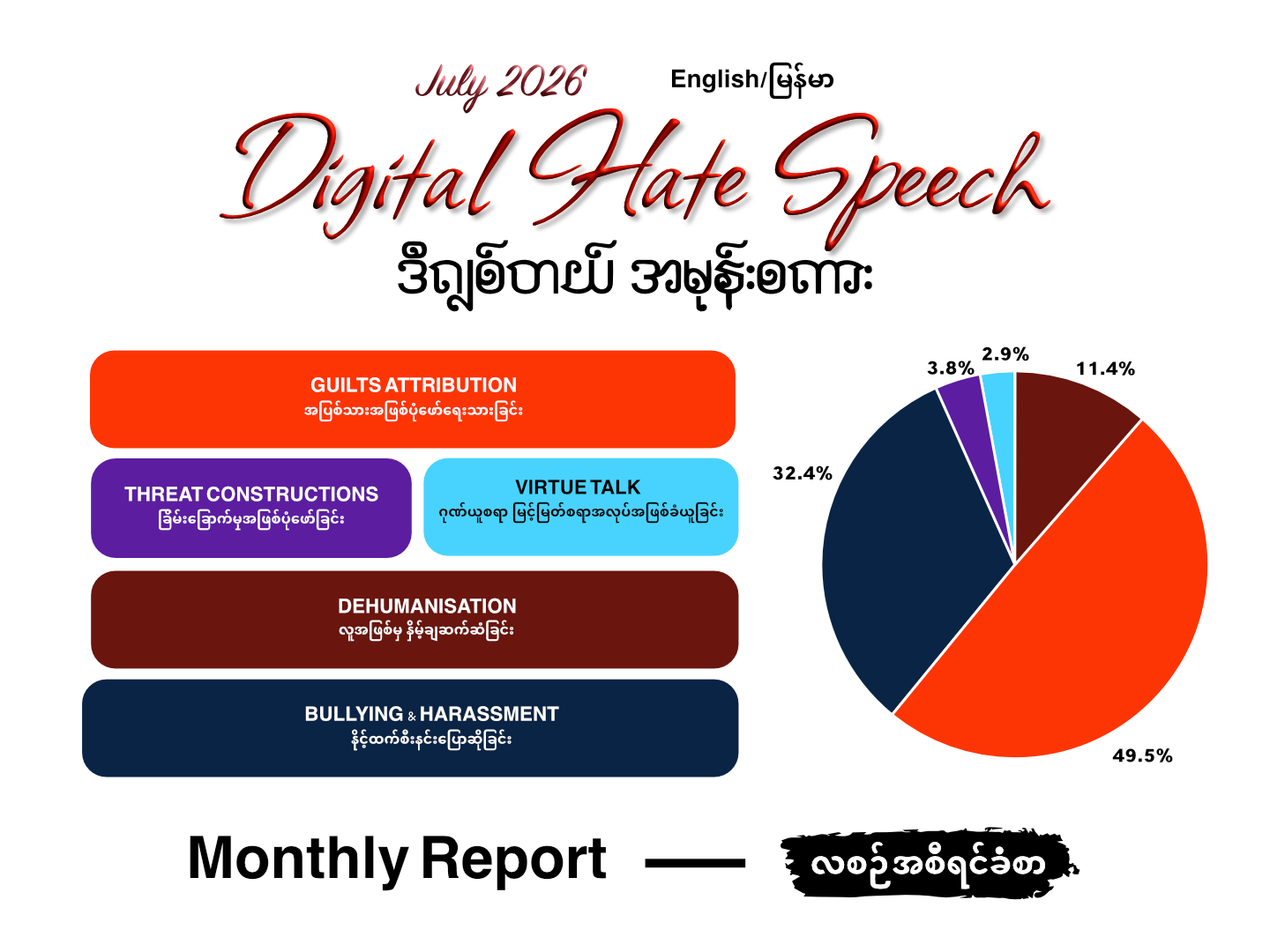
This report was compiled by monitoring online and print media used by the military junta and its supporters to disseminate hate speech. During July 2026, BHRN conducted a monitoring exercise with the following results:
- Facebook: monitored 3 groups, one page, and 13 accounts; identified 68 incidents of hate speech.
- Telegram: Monitored 24 Channels; identified 28 incidents of hate speech.
- TikTok: Monitored 24 Accounts; identified 18 incidents of hate speech.
- Print Media: Monitored 2 newspapers and 1 journal.
In total, 114 instances of misinformation/disinformation and hate speech were documented during May. The findings are presented using tables, graphs, and clear descriptive text. This report further analyses the root causes and impacts of hate speech and offers recommendations for prevention and mitigation. Due to significant limitations in achieving comprehensive coverage of the entire social media landscape, there may be undocumented incidents of hate speech that fall outside the scope of this report.
အမုန်းစကားများ ဖြန့်ဝေရန်အတွက် စစ်အစိုးရနှင့် ထောက်ခံသူများ အသုံးပြုနေသည့် အွန်လိုင်းနှင့် ပုံနှိပ်မီဒီယာတို့ကို စောင့်ကြည့်ခြင်းဖြင့် ဤအစီရင်ခံစာကို စုစည်းထားပါသည်။ အထူးသဖြင့် BHRN သည် ၂၀၂၆ခုနှစ် ဇူလိုင်လ တွင် Facebook group ၃ ခု Page ၁ ခု နှင့် Facebook Account ၁၃ ခု စောင့်ကြည့်မှုတွင် အမုန်းစကားတွေ့ရှိမှု ( ၆၈ ) ခု ၊ Telegram Channels ၂၄ ခု မှ အမုန်းစကားတွေ့ရှိ မှု ( ၂၈ ) ခု ၊ Tik Tok account ၂၄ ခုစောင့်ကြည့်ရာတွင် အမုန်းစကားတွေ့ရှိမှု ( ၁၈ ) ခုကို တွေ့ရှိခဲ့ရသည်။ ပုံနှိပ်မီဒီယာ စောင့်ကြည့်မှု အနေဖြင့် သတင်းစာ ၂ စောင် နှင့် ဂျာနယ် ၁ စောင် တို့ကို စောင့်ကြည့်ခဲ့ပါသည်။
ဇူလိုင်လအတွင်း အမုန်းစကားလေ့လာစောင့်ကြည့်မှုတွင် သတင်းတုသတင်းမှားများ၊ အမုန်းစကားဖြန့်ဝေမှု ( ၁၁၄ ) ခုကို မှတ်တမ်းတင်ခဲ့သည်။ ရလဒ်များကို တင်ပြရာတွင် သုတေသနရလဒ်များကို ဇယားများ၊ ဂရပ်များနှင့် ရှင်းလင်းသော စာသားများဖြင့် တင်ပြမည်ဖြစ် သည်။ အမုန်းစကားများ၏ အဓိကအကြောင်းရင်းများ၊ သက်ရောက်မှုများနှင့် ကာကွယ်တားဆီးရန် နည်းလမ်းများကို အကြံပြုချက်များနှင့်အတူ တင်ပြမည်ဖြစ်သည်။ ဆိုရှယ်မီဒီယာတခုလုံးကို လွှမ်းခြုံနိုင်သည့် လေ့လာစောင့်ကြည့်မှုမျိုးကို လုပ်ဆောင်ရန်အတွက် အကန့်သတ်များစွာရှိသဖြင့် မှတ်တမ်းမတင်နိုင်သည့် အမုန်းစကားဖြစ်စဉ်များလည်း ရှိနိုင်ပါသည်။
Read more: July 2026 - Digital Hate Monthly Report (Eng -Myan)
- Hits: 338

- Hits: 239
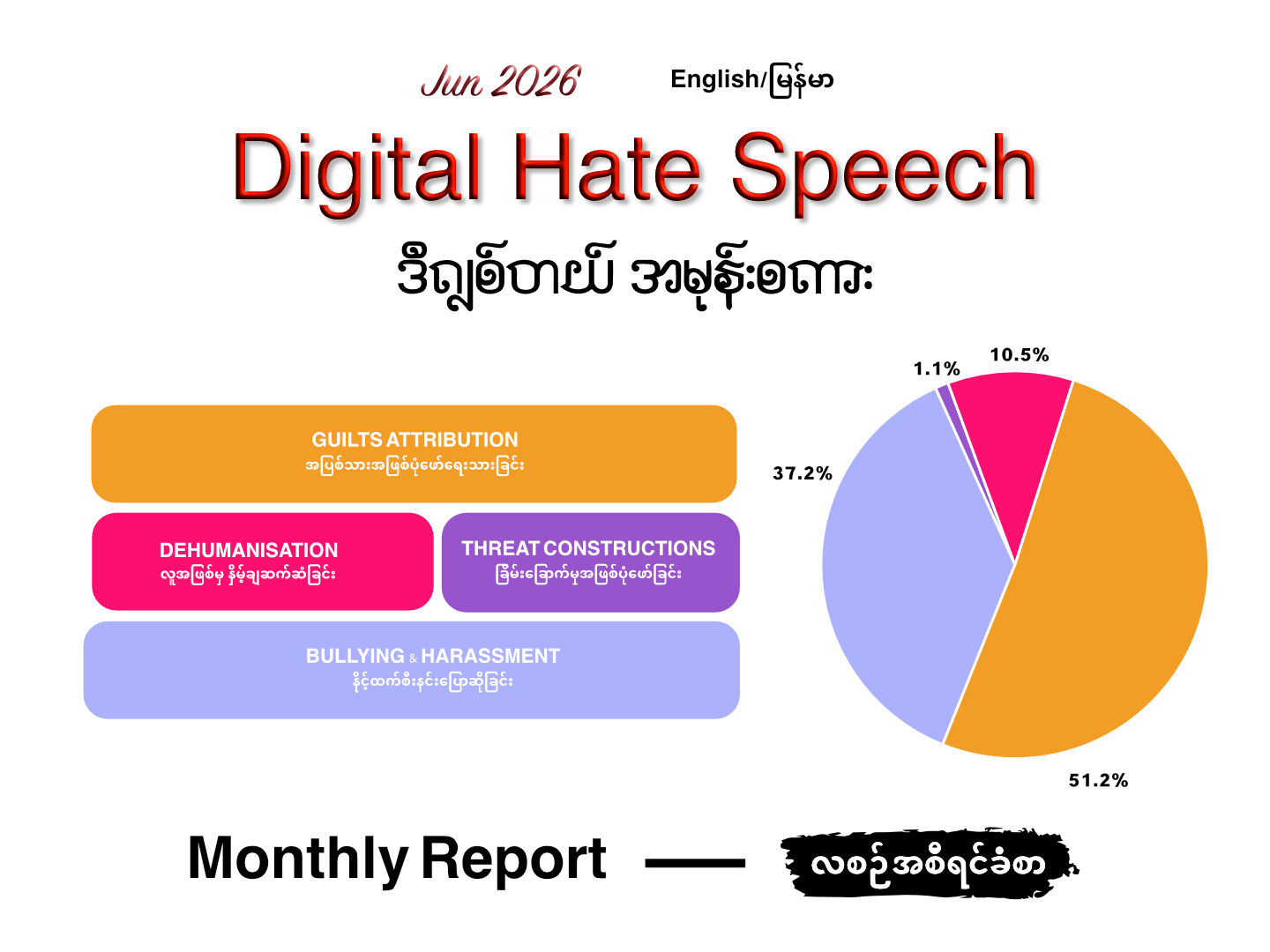
- Facebook: monitored 3 groups, one page, and 13 accounts; identified 40 incidents of hate speech.
- Telegram: Monitored 24 Channels; identified 42 incidents of hate speech.
- TikTok: Monitored 24 Accounts; identified 16 incidents of hate speech.
- Print Media: Monitored 2 newspapers and 1 journal.
In total, 98 instances of misinformation/disinformation and hate speech were documented during May. The findings are presented using tables, graphs, and clear descriptive text. This report further analyses the root causes and impacts of hate speech and offers recommendations for prevention and mitigation. Due to significant limitations in achieving comprehensive coverage of the entire social media landscape, there may be undocumented incidents of hate speech that fall outside the scope of this report.
Read more: Jun 2026 - Digital Hate Monthly Report (Eng -Myan)
- Hits: 469
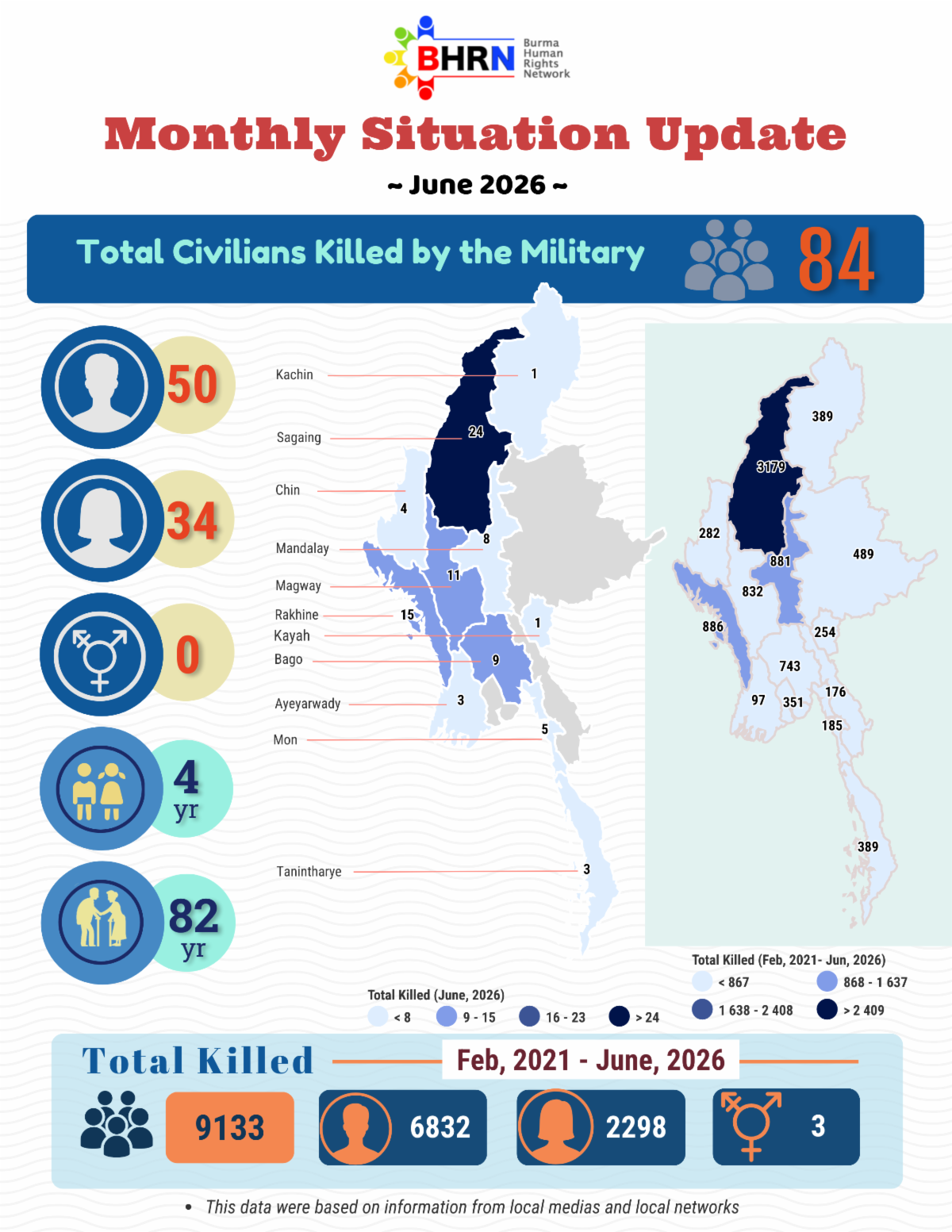
In June 2026, the junta continued to seek recognition from foreign governments as it simultaneously carried out airstrikes on villages, displacement camps, and other civilian areas across the country. Min Aung Hlaing followed his late-May visit to India with a state visit to China, where China issued a joint statement endorsing Min Aung Hlaing and welcoming the military’s fraudulent elections, and the month closed with BIMSTEC moving to hand the junta a regional leadership role while Laos and Belarus deepened ties with the junta. Human rights organisations and parliamentarians pressed governments to reject the junta and pursue accountability for its crimes, as Fortify Rights urged the United Kingdom to lead an International Criminal Court referral under Article 14 of the Rome Statute and civil society lodged a complaint with Thailand’s national human rights commission over gas revenue reaching the military.