
- Hits: 1104
The study focuses on widely used social media platforms such as Facebook, TikTok, and Telegram, analyzing content related to incitement and violence, ethnically and religiously motivated insults, and intense political criticism. In addition, the report proposes legal, technological, and community-based measures to prevent and mitigate these hate speech incidents.
This report also highlights changes in hate speech in the context of Myanmar’s current political, economic, and social conditions. The information aims to serve as a reference for peacebuilders, media workers, policymakers, and civil society organizations.
မြန်မာနိုင်ငံအတွင်း ဆိုရှယ်မီဒီယာနှင့် အခြားဆက်သွယ်ရေးလမ်းကြောင်းများပေါ်တွင် အမုန်းစကား (Hate Speech) များ၊ သတင်းတုသတင်းမှားများ ပျံ့နှံ့မှုသည် လူမျိုးရေး၊ ဘာသာရေးနှင့် နိုင်ငံရေးတင်းမာမှုများကို ပိုမိုအားကောင်းစေပြီး လူမှုအသိုင်းအဝိုင်းအတွင်း ပဋိပက္ခများ မြင့်တက်လာစေနိုင်သည်။ ဤအစီရင်ခံစာသည် ၂၀၂၅ ခုနှစ်၊ အောက်တိုဘာလအတွင်း မြန်မာနိုင်ငံတွင်ဖြစ်ပေါ်ခဲ့သော အမုန်းစကားများကို စနစ်တကျ စောင့်ကြည့်လေ့လာကာ ၎င်းတို့၏ အဓိကအရင်းအမြစ်များ၊ ပျံ့နှံ့မှုပုံစံများ၊ ထိခိုက်နိုင်ခြေရှိသော လူမှုအုပ်စုများနှင့် ဖြစ်ပေါ်လာနိုင်သည့် သက်ရောက်မှုများကို ဆန်းစစ်ထားပါသည်။
ဤလေ့လာမှုတွင် ဖေ့စ်ဘုတ် (Facebook), TikTok, တယ်လီဂရမ် (Telegram) အပါအဝင် လူသုံးများသော ဆိုရှယ်မီဒီယာပလက်ဖောင်းများပေါ်ရှိ အကြမ်းဖက်မှုနှင့် လှုံ့ဆော်မှုဆိုင်ရာ အကြောင်းအရာများ၊ လူမျိုးရေး နှင့် ဘာသာရေး အခြေပြု စော်ကားမှုများ၊ နိုင်ငံရေးအရ ပြင်းထန်သော ဝေဖန်မှုများကို အဓိကထား လေ့လာထားပါသည်။ ထို့အပြင် ဤမုန်းတီးရေးစကားဝိုင်းများကို တားဆီးကာကွယ်ရန် လိုအပ်သော ဥပဒေရေးရာ၊ နည်းပညာဆိုင်ရာနှင့် လူမှုအသိုင်းအဝိုင်းဆိုင်ရာ ဖြေရှင်းနည်းများကိုလည်း အကြံပြုထားပါသည်။
အောက်တိုဘာလအတွင်း မြန်မာနိုင်ငံ၏ လက်ရှိနိုင်ငံရေး၊ စီးပွားရေး နှင့် လူမှုရေး အခြေအနေများနှင့် ဆက်စပ်ကာ အမုန်းစကားများ ပြောင်းလဲလာပုံကို ဤအစီရင်ခံစာတွင် ဖော်ပြထားပါသည်။ ဤအချက်အလက်များသည် ငြိမ်းချမ်းရေး တည်ဆောက်သူများ၊ မီဒီယာလုပ်သားများ၊ မူဝါဒချမှတ်သူများနှင့် အရပ်ဘက်လူမှုအဖွဲ့အစည်းများအတွက် အသုံးဝင်သော ကိုးကားချက်တစ်ခု ဖြစ်စေရန် ရည်ရွယ်ပါသည်။
Read more: October 2025 - Digital Hate Monthly Report (Eng -Myan)
- Hits: 622
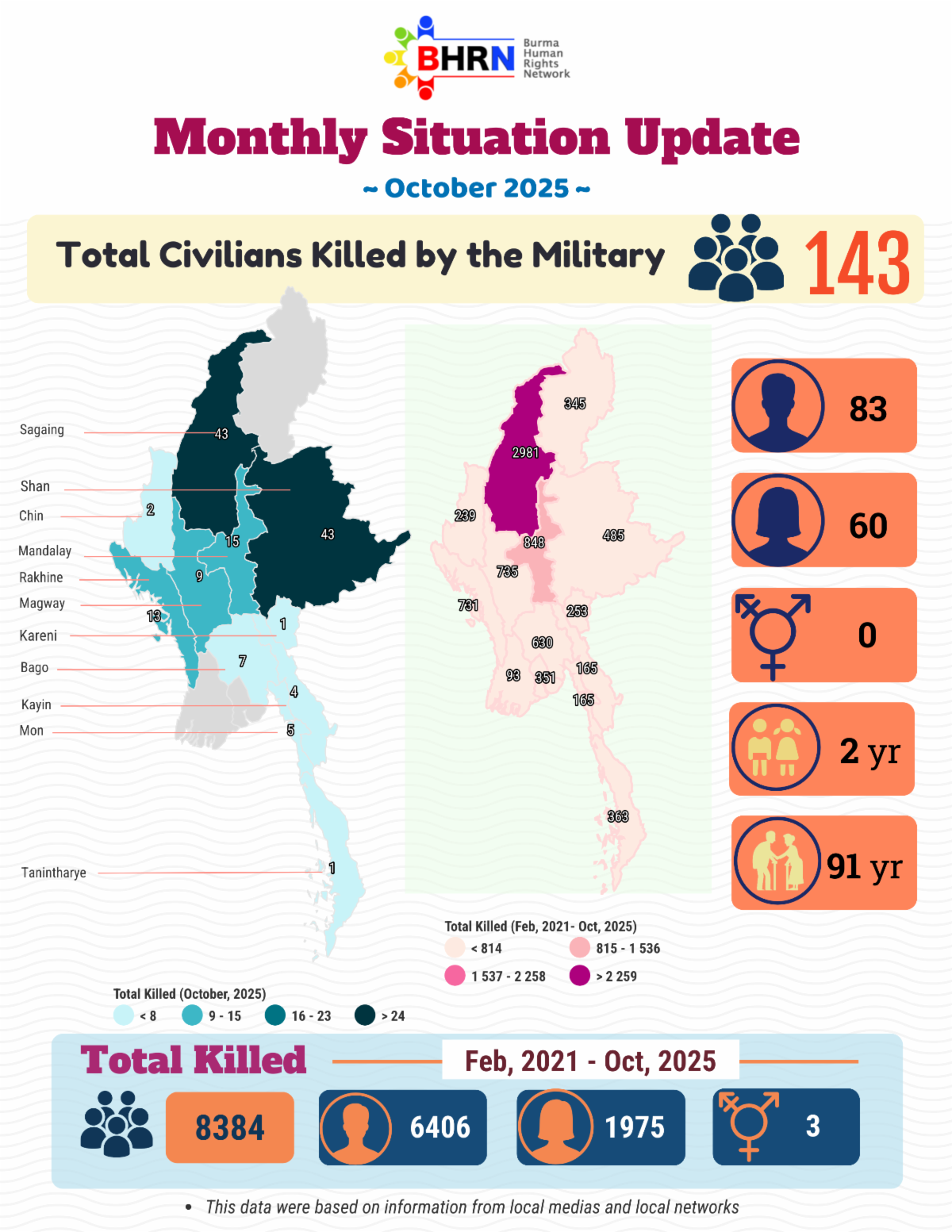
In October, the Myanmar junta ramped up preparations for sham elections in December while systematically coercing participation and attacking civilians across the country. On 16 October, Min Aung Hlaing announced a three-phase timeline covering 274 townships while excluding 56 areas under resistance control. The regime forced internally displaced persons to register as voters in exchange for cash payments, threatened prisoners with solitary confinement unless they cast advance votes, and re-arrested political prisoners at prison gates to silence potential opposition. The junta arrested three prominent artists on 27 October for criticizing an election propaganda film, prosecuted 64 people under a new Election Protection Law authorizing death penalties for vaguely defined "election interference," and banned all campaign rallies. Approximately 55,000 electronic voting machines will replace paper ballots despite serious transparency concerns, while only six parties field national candidates and voter lists contain hundreds of errors including names of deceased people.
Read more: October 2025 - Summary of Monthly Situation Update
- Hits: 1044
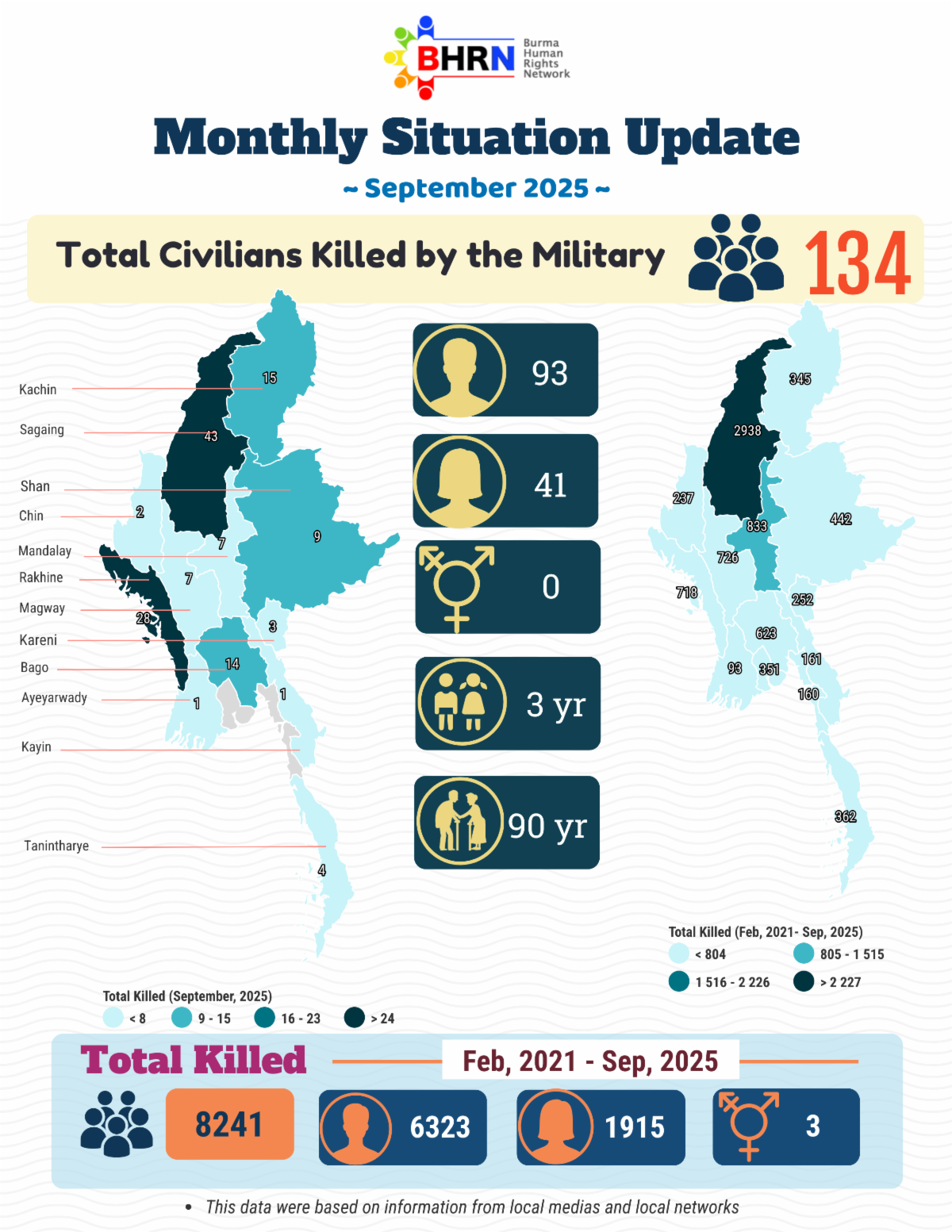
In September 2025, the Myanmar military junta continued laying the groundwork for a tightly controlled first phase of polling scheduled for December, while deepening repression to eliminate scrutiny. The Union Election Commission approved nearly 5,000 candidates under restrictive conditions, barred 56 townships outright, and imposed severe penalties, including against minors, for criticism or perceived disruption of the vote. These developments coincided with the expansion of state surveillance built into national telecom networks, allowing authorities to trace online activity and target individuals for arrest. Taken together, these measures are not designed to reflect the will of the people, but to create the appearance of legitimacy while shielding those in power from scrutiny or accountability.
Read more: September 2025 - Summary of Monthly Situation Update
- Hits: 608
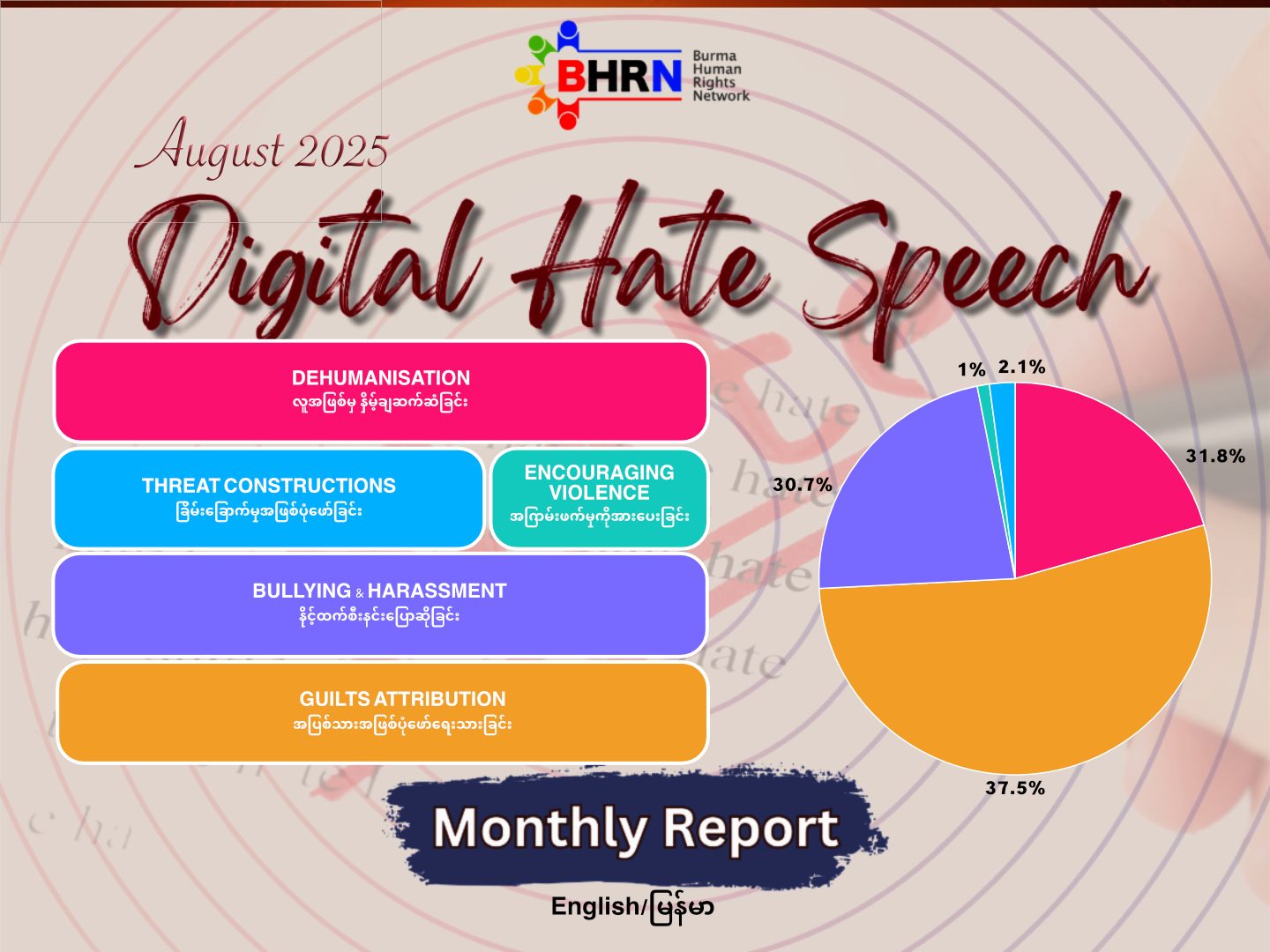
This report was compiled through monitoring online and print media used by the military government and its supporters to disseminate hate speech. In particular, during August 2025, BHRN found 49 instances of hate speech from monitoring 3 Facebook groups, 1 Facebook page, and 13 Facebook accounts; 35 instances of hate speech from 24 Telegram channels; and 14 instances of hate speech from monitoring 24 TikTok accounts. In terms of print media monitoring, 2 newspapers and 1 journal were observed.
Read more: August 2025 - Digital Hate Monthly Report (Eng -Myan)
- Hits: 1250
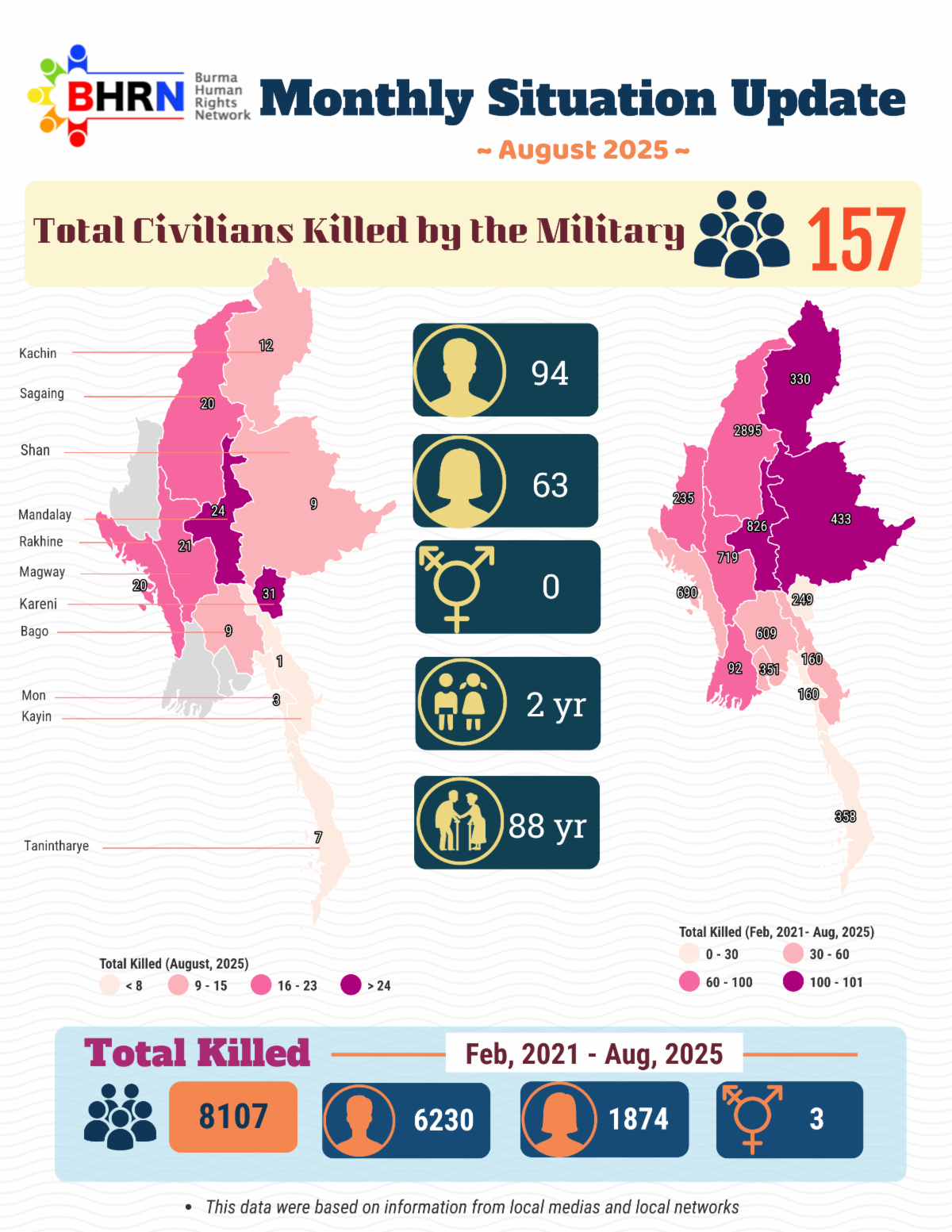
In August, the junta reorganized its rule under the SSPC while widening coercive legislation and surveillance, tightening control over civic space and election preparations. The National Defence and Security Council dissolved the SAC and installed the SSPC under Min Aung Hlaing, then declared a new emergency and martial law in 63 townships. The junta-run Union Election Commission announced a first phase of polling on 28 December 2025. In parallel, the junta activated the Election Protection Law, adopted a Military Secrets law carrying life imprisonment or the death penalty, brought the Cybersecurity Law into force, and suspended key privacy protections. Enforcement in Mandalay through phone searches and PSMS identity screening showed how these measures operate in practice. Together they expand detention, surveillance, and censorship powers and create conditions that cannot support a credible vote.
Read more: August 2025 - Summary of Monthly Situation Update