
- Hits: 962
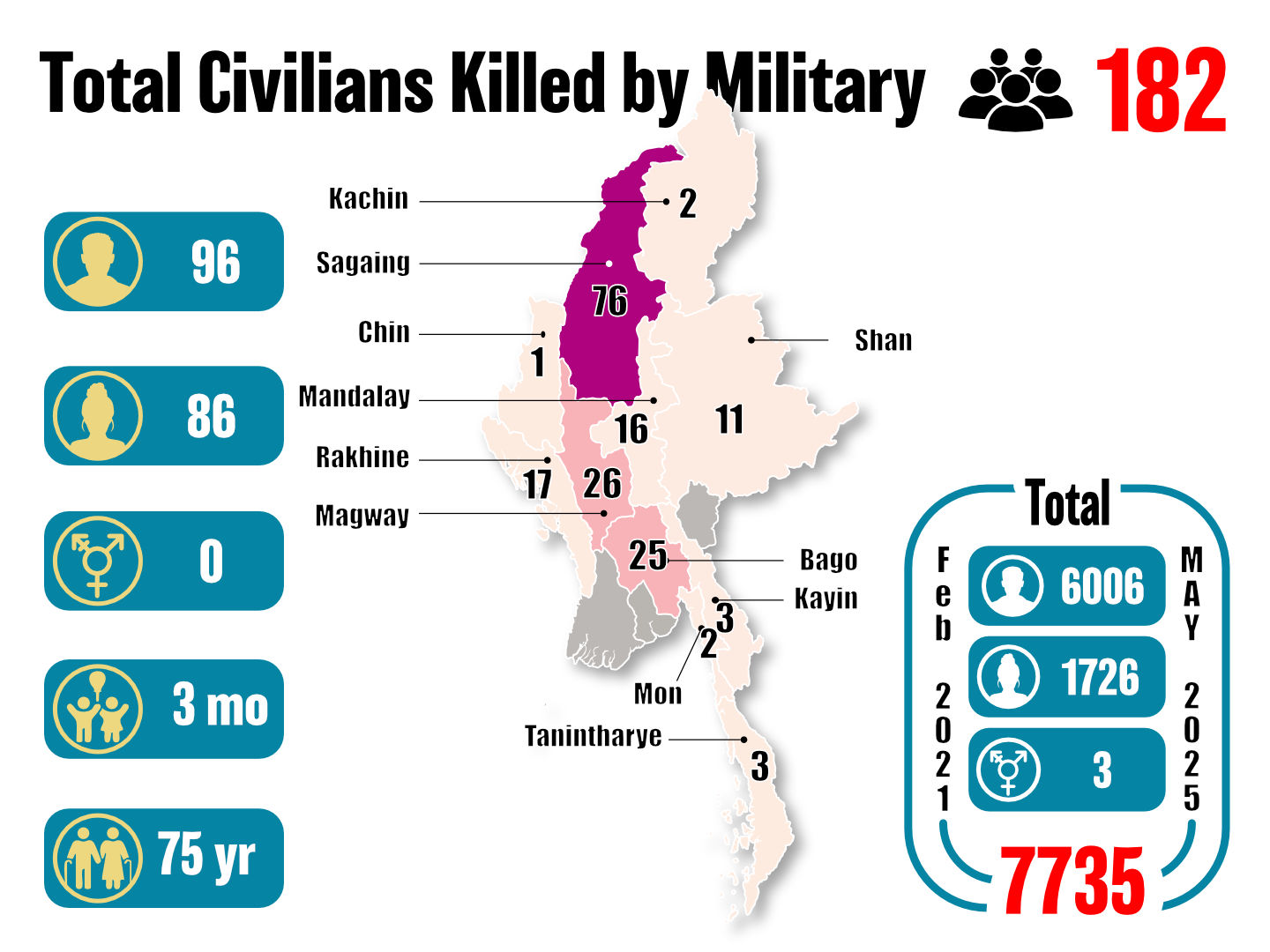
In May 2025, Myanmar’s military junta continued its campaign of deliberate attacks on civilians, deploying increasingly lethal tactics while systematically obstructing aid to earthquake-affected communities. The junta’s use of internationally banned cluster munitions on a school in Sagaing Region, killing 22 children and two teachers, was one of the deadliest single attacks on an education site since the 2021 coup and reflects a growing pattern of direct targeting of civilians and civilian objects in non-combat zones. Throughout the month, BHRN documented repeated junta airstrikes on schools, homes, weddings, monasteries, mosques, and displacement camps, as well as mass arbitrary arrests, enforced disappearances, and the denial of humanitarian assistance to those most in need.
The junta’s violence was mirrored by escalating abuses carried out by the Arakan Army (AA) in northern Rakhine State. In areas under AA control, Rohingya civilians were forcibly evicted, beaten, conscripted into forced labor, and denied access to medical care. Religious sites were confiscated or destroyed, and at least two deadly sea journeys were traced back to AA-perpetrated abuses that pushed Rohingya civilians to flee. Survivors described being extorted, assaulted, and left with no option but to attempt passage to Bangladesh. These actions form part of a growing body of evidence that the AA is systematically targeting the Rohingya population and committing crimes against humanity.
- Hits: 582
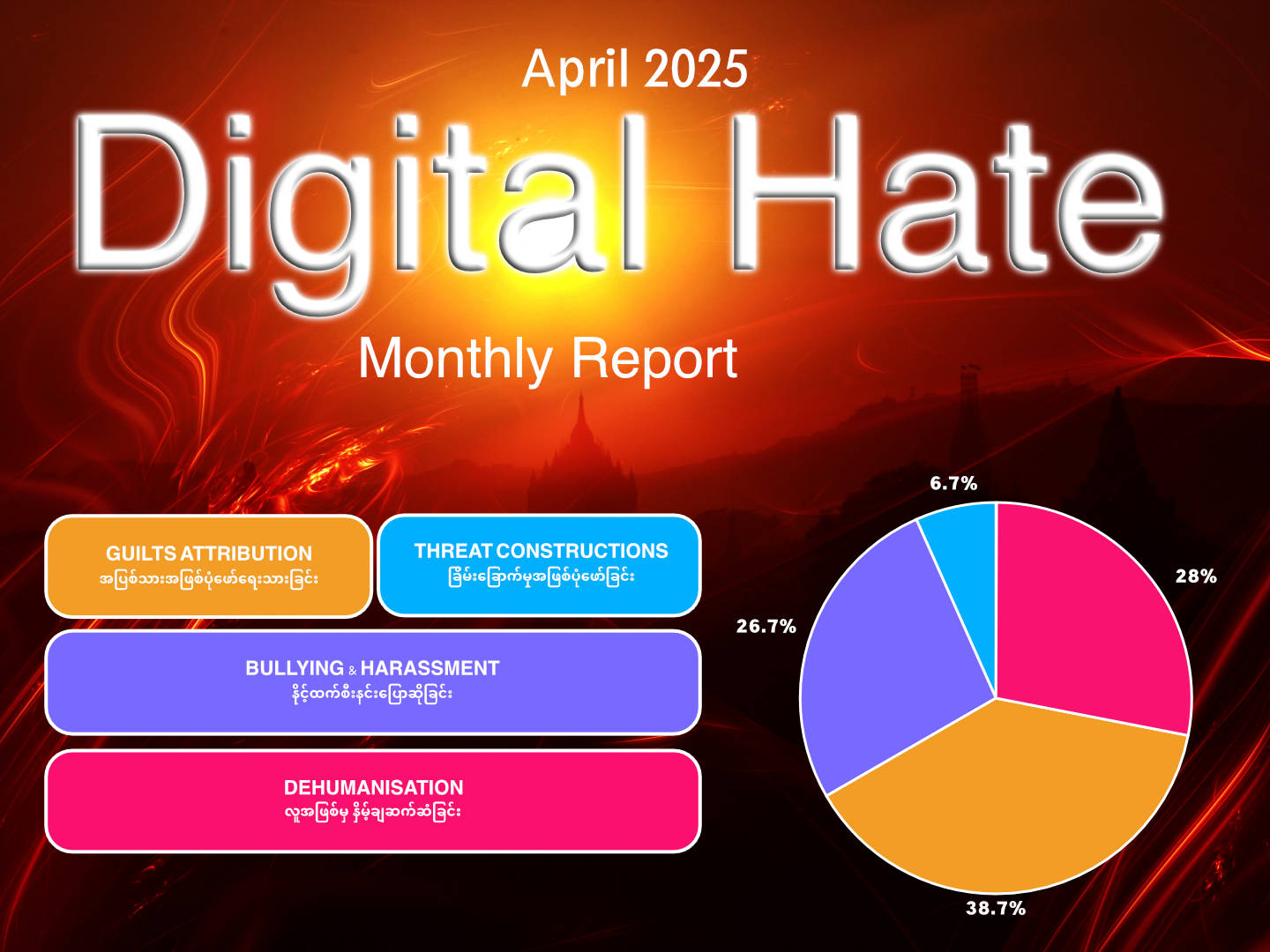
This report has been compiled through monitoring online and print media used by the junta and its supporters to spread hate speech. Specifically, in April 2025, BHRN monitored 3 Facebook groups and 13 Facebook accounts and found 29 instances of hate speech; 24 Telegram channels with 32 instances; and 24 TikTok accounts with 19 instances. For print media monitoring, two newspapers and one journal were observed. During the monitoring of hate speech in April, a total of 80 cases of misinformation, disinformation, and hate speech dissemination were recorded.
Read more: April 2025 - Digital Hate Monthly Report (Eng -Myan)
- Hits: 960
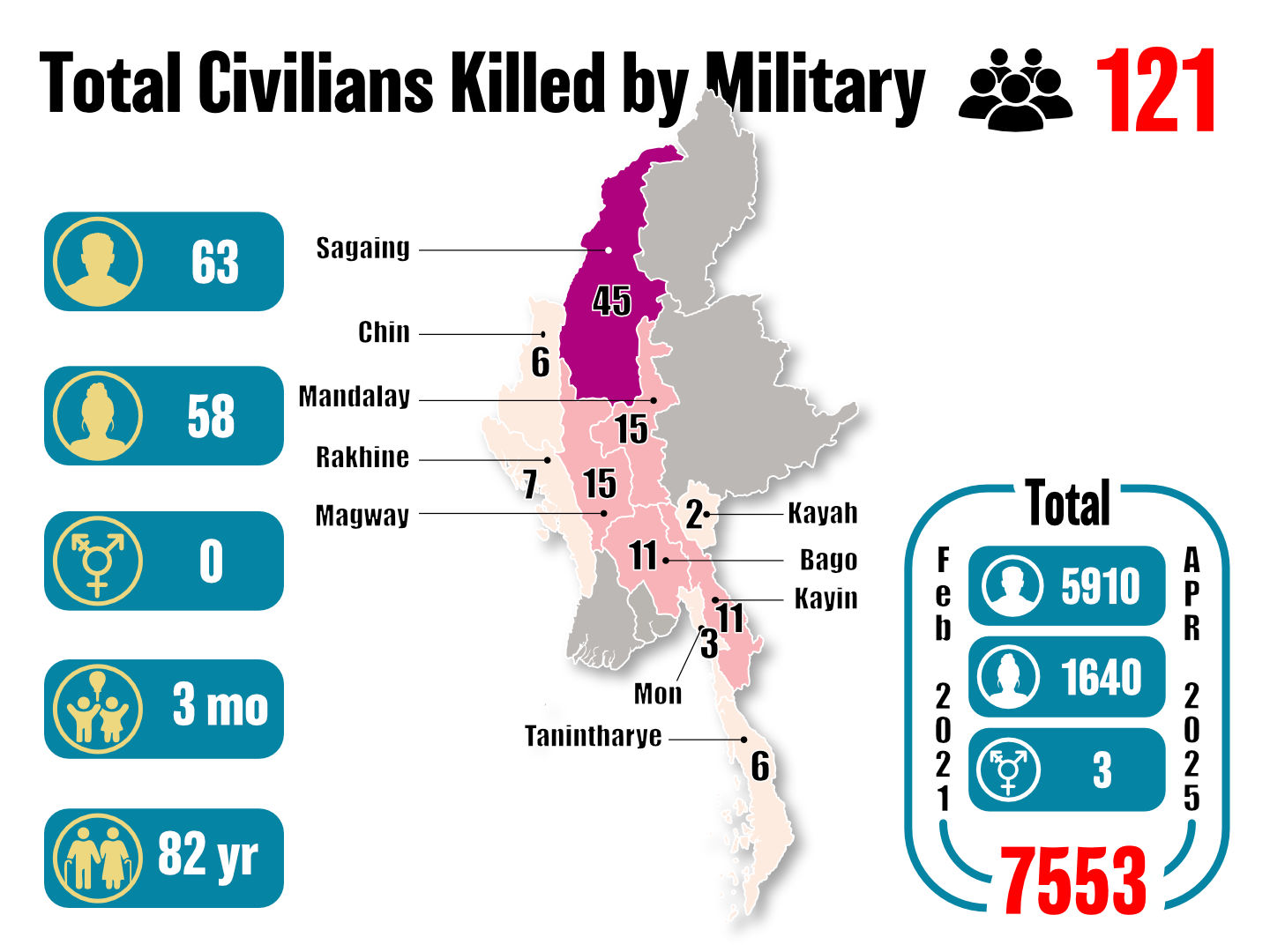
In April 2025, Myanmar’s military junta escalated its campaign of violence against civilians, compounding the suffering of communities already devastated by the 28 March earthquake. Instead of facilitating lifesaving relief, the junta used the disaster as cover to intensify aerial assaults, shelling, and ground raids across the country. Junta forces targeted crowded markets, religious sites, homes, and schools and killing children, elderly people, and entire families.
Despite publicly declaring a ceasefire on 2 April, the junta broke it within hours and continued to carry out operations that targeted civilians and obstructed humanitarian access. In disaster affected areas like Sagaing, Mandalay, and Chin States, airstrikes destroyed churches, monasteries, and shelters, while junta forces blocked aid deliveries and dismantled temporary mosques set up by displaced Muslim communities.
Rohingya communities faced renewed persecution, not only from the junta but also from the Arakan Army (AA), which continues to expand its control across Rakhine State. Throughout April, the AA carried out forced evictions, destroyed homes and places of worship, and ordered entire villages to relocate under threat. The silence of many regional and international actors in the face of these abuses further entrenches a dangerous pattern of selective accountability.
- Hits: 683
In January 2025, the military regime enacted a new technology law aimed at controlling hate speech and fake news. The law mandates the removal of "fake news" and "hate speech" from internet platforms, with penalties for non-compliance. Additionally, it bans the use of VPN services without permission. However, the military’s law is only focused on criticisms of it and does not affect ethnic armed groups, the People’s Defense Forces, or the general public.
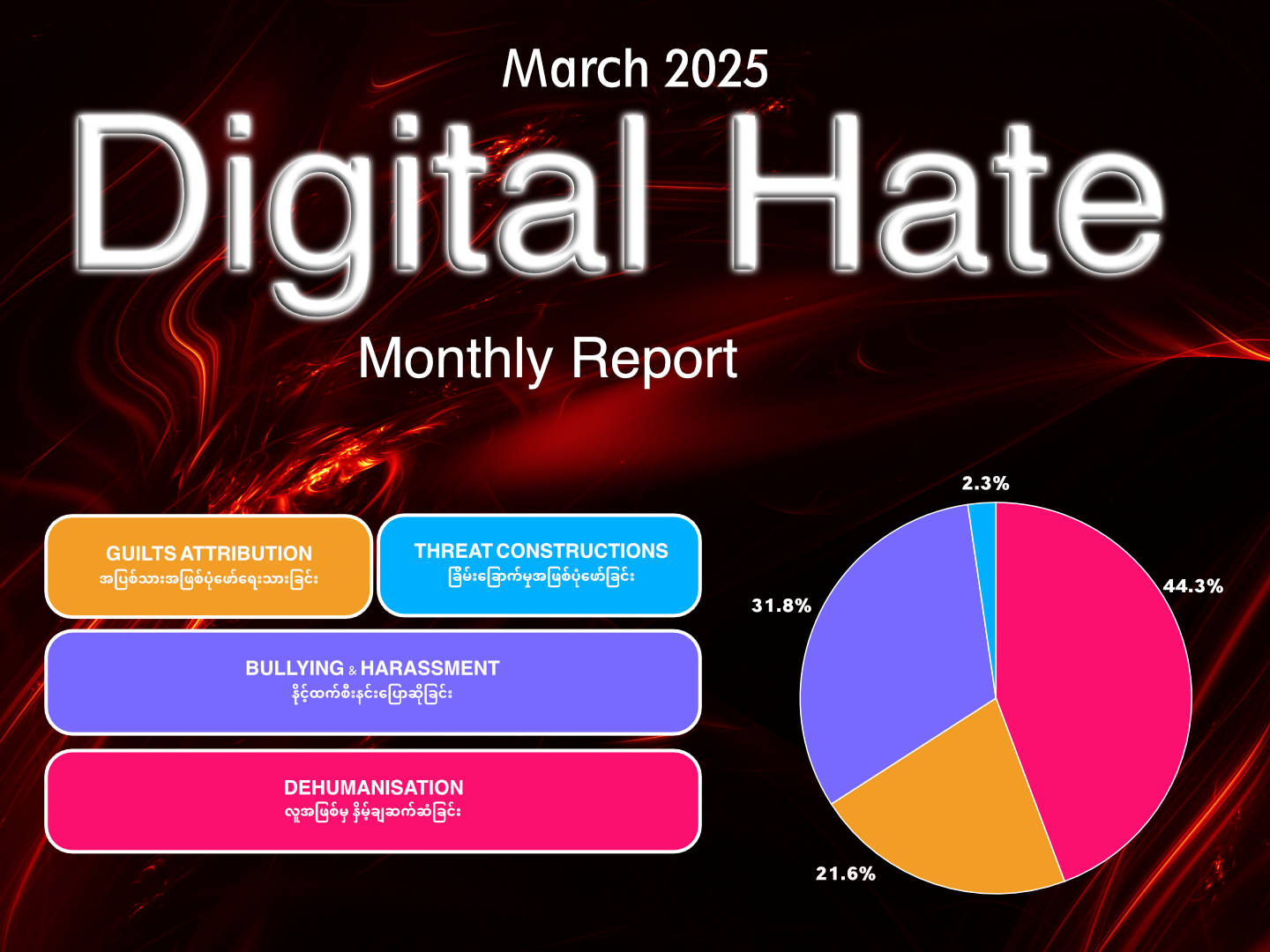
In March 2025, widespread hate speech on social media and print media in Myanmar was prominently observed in BHRN's Hate Speech Monitoring Report. Particularly, hate speech targeting Muslims, the Rohingya ethnic, PDF members, ethnic armed groups such as AA and KIA, members of the People’s Defense Forces, and female revolutionaries has been on the rise. These speeches involve racial, religious, gender, political, and social class-based justifications, portraying these groups as criminals, degrading them, and inciting violence.
It was observed that, in terms of religious hate speech, the Buddhist community predominantly spread hate towards Muslims. Following the earthquake on March 28, there were also instances of hate speech regarding the destruction of many Islamic religious sites including mosques. Although these buildings have existed for over a century, they were severely damaged due to successive government denial of repair permits. There have also been calls to prevent the reconstruction of these schools, leaving Muslims excluded from assistance in the process.
- Hits: 1634
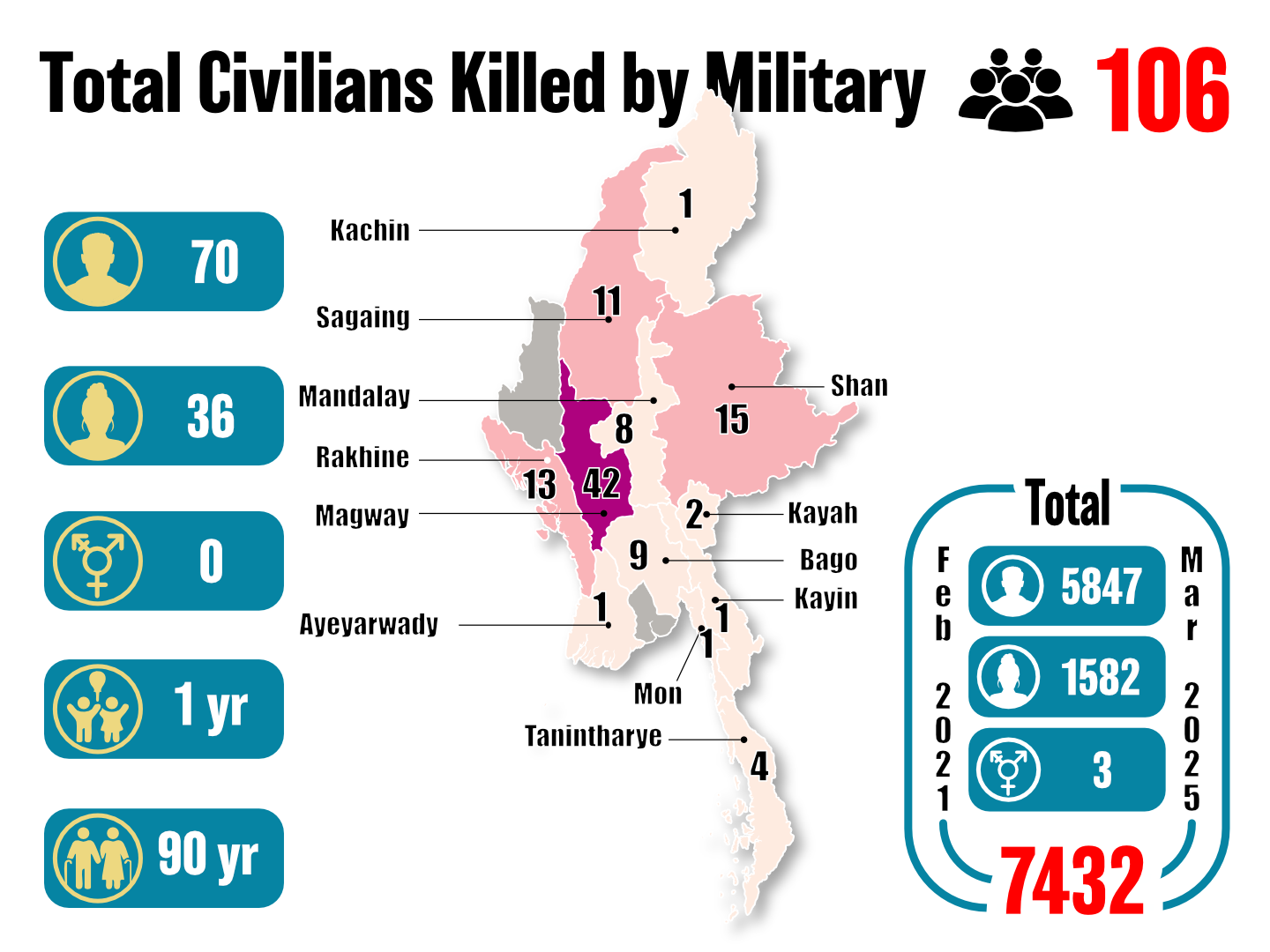
Myanmar’s military junta continued to terrorize civilians throughout March 2025, even as a devastating 7.7 magnitude earthquake struck the country. The disaster, which killed thousands and displaced tens of thousands more, was met not with aid but with obstruction: junta forces blocked humanitarian access, denied entry to earthquake affected opposition-held areas, and even launched fresh airstrikes on communities struggling to survive.
While pro-democracy forces declared ceasefires to facilitate relief efforts, the military pressed ahead with attacks in Sagaing, Bago, Magway, and Shan States. Junta air raids killed dozens of civilians and destroyed schools, homes, and religious buildings. Monasteries were bombed, clergy killed, and churches burned, part of a growing pattern of attacks on protected places and people.