
- Hits: 774
Operation 1027 resumed this month in Northern Rakhine State which indicates China’s tolerance of the regime in Nay Pyi Taw has gone thinner. Just days after the operation resumed one of the members of the Brotherhood Alliance, which is reading the operation, Ta’ang Palaung Liberation Army (TNLA) said it is poised to take control of two major towns in Northern Shan State, Naungchio and Kyaukmae. Now they are moving toward Pyi Oo Lwin, the town which hosts the junta’s biggest military training institute. Other priced targets the alliance is targeting are the capital of Northern Shan State Lashio also the headquarters of the regime Northeastern Command, and Mandalay, the seat of Burma's last king.
In the west another member of the alliance the Arakan Army (AA) is making further gains this month, now they control the second-largest city in the State, Thandwe.
It is no secret that the Chinese government at the highest level is backing these rebel groups fighting the regime led by Min Aung Hlaing, whom Beijing most despise among so-called Myanmar leaders.
China perhaps may be looking for how to maintain stability in Myanmar in the post-Min Aung Hlaing era, they seek support from former leaders of Myanmar including a reformist former president U Thein Sein in trying to keep the country united after the current conflict ended.
- Hits: 837
Two key developments that took place last October have contributed to the current economic troubles in Myanmar.
They are - announcements by the United States on the imposition of sanctions on Myanmar State-owned Myanma Oil and Gas Enterprise (MoGE), a key source of foreign exchange for the junta and other is the beginning of “Operation 1027”, which not only put the junta on the back foot militarily, but it also gives a major blow to the junta’s source of income. The military operation by the Three Brotherhood Alliance that started on 27 October led the junta to lose the major border trading towns with China to the rebel groups.
According to some experts, the income from the sales of oil and gas amounts to more than US$1.5 billion in the financial year 2020-2021. The border trade with China accounts for USD 3 billion in 2023, up to 40 percent of the country's overall border trade figure.
Since last October the junta also lost control of most of the border trading points along the Thai, Indian and more recently with Bangladesh, to different rebel groups. The military losses to the ethnic armies also led to the loss of more than USD 7 billion per year in total border trade between Myanmar and its neighbours.
- Hits: 1083
INTRODUCTION
- As the conflict in Rakhine intensifies the United Nations says it expects a battle for the Rakhine State capital Sittwe between the Myanmar military and the Arakan Army (AA). A statement issued by the High Commissioner of the UN Human Rights Commission (UNOHCHR) on 19 April[1] said ongoing conflict in Rakhine State put Rohingya Muslims at "grave risk". "The military has been fast losing ground to the Arakan Army (AA) throughout northern and central Rakhine. This has led to intensified fighting in the townships of Buthidaung and Maungdaw, ahead of an expected battle for the Rakhine State capital, Sittwe. The two townships are home to large Rohingya populations, putting them at grave risk, the statement said.
- Hits: 785
During March, the junta lost more territories in Rakhine, Kayin and Kachin states, also hundreds of more junta troops were killed or surrendered. As a result of these military debacles, the junta now has no or limited land access to all the countries Myanmar shares the border.
As the concept of Burmese nationalism, based on which the Burmese army was established with the aid of fascist Japan in 1941, is now in the doldrums, its top leadership still survive in power somehow, however, an informed source in Nay Pyi Taw may be able to confirm that their days are numbered.
- Hits: 1169
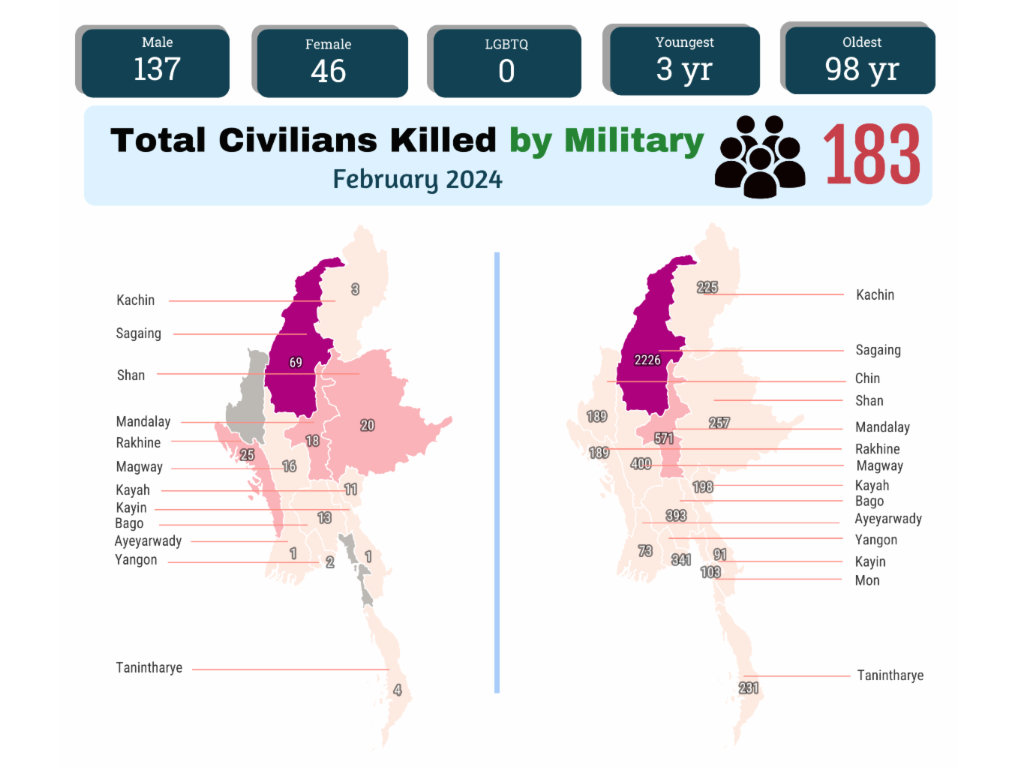
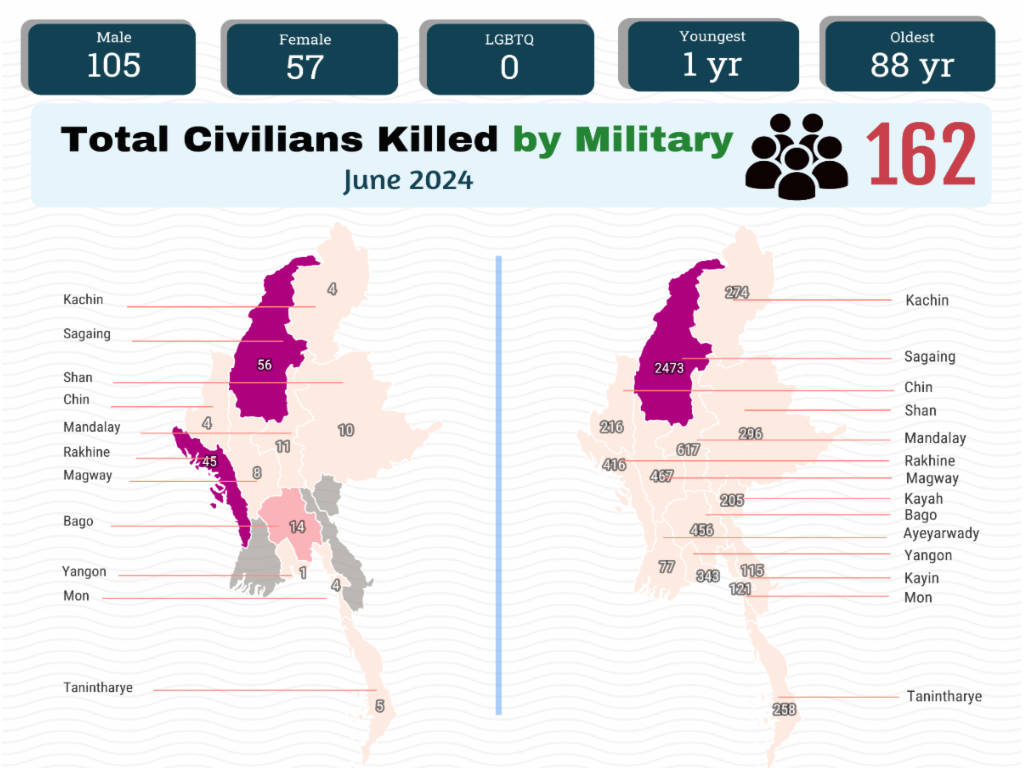
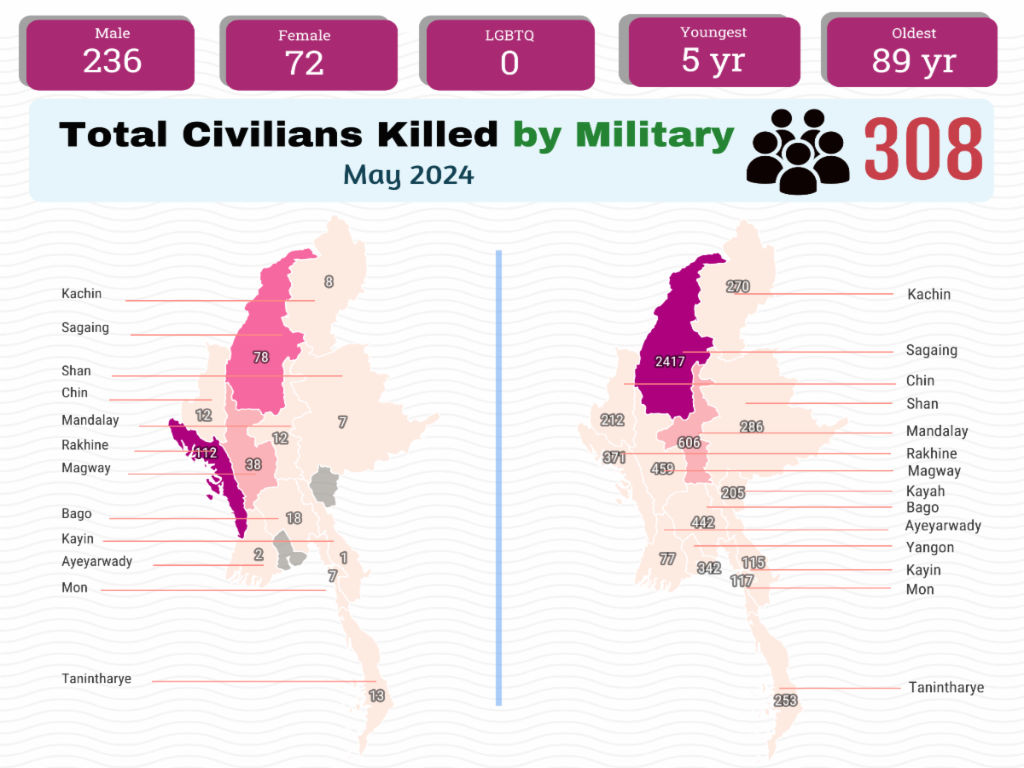
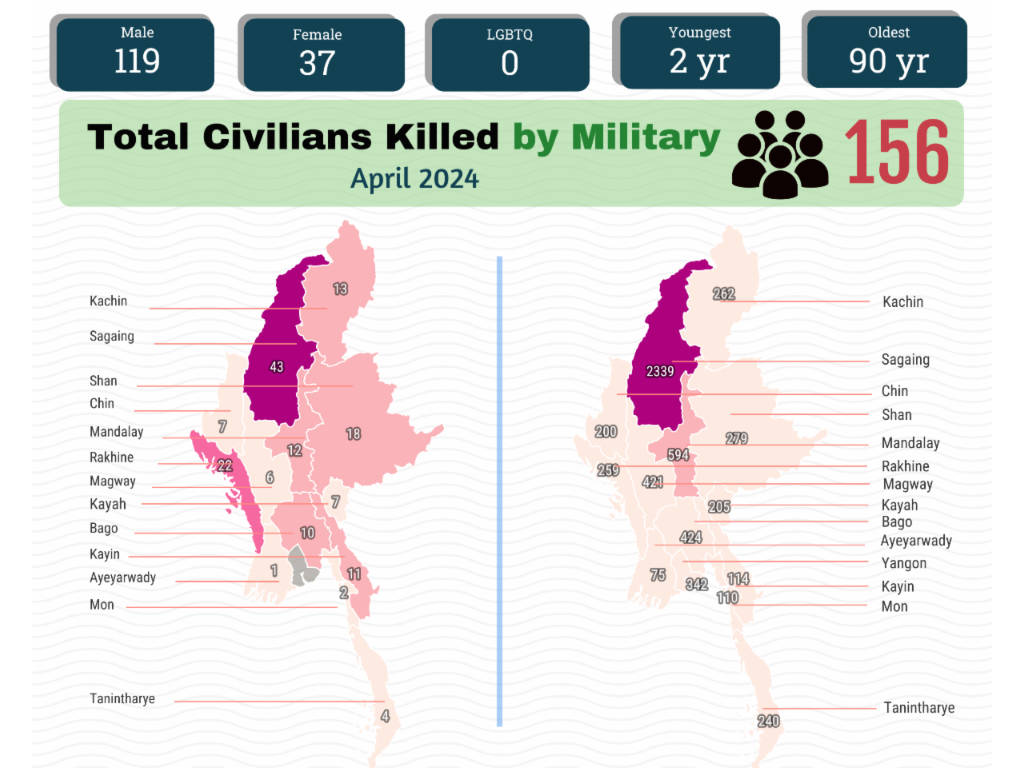
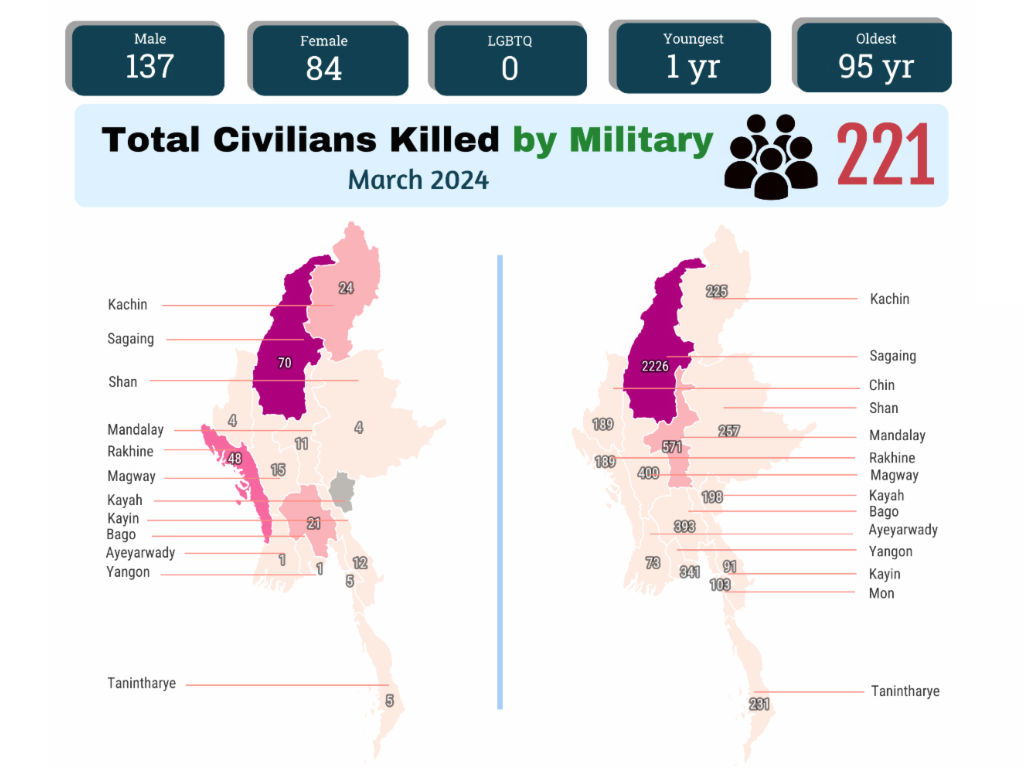
The panic situation among the public in Myanmar due to the enactment of the conscription law on 10 February as well as more losses to the ethnic groups and dwindling support from the regional allies, has left the Min Aung Hlaing regime in the worst crisis since its forcibly took overpower more than three years ago. The regime embarked on the worst human rights violations since it took overpower and unleashed unprecedented levels of brutality against the people of Myanmar. According to some estimates, the regime killed nearly 5000 opponents during the past three years.
In addition, the regime has created the worst economic crisis for Myanmar in modern times, with soaring inflation, and power and fuel shortages. The situation of the minority groups continues to worsen with the Rohingya and Kaman Muslims forcibly conscripted in Rakhine State.
Despite these facts, the regime survives for now.