
- Hits: 1017
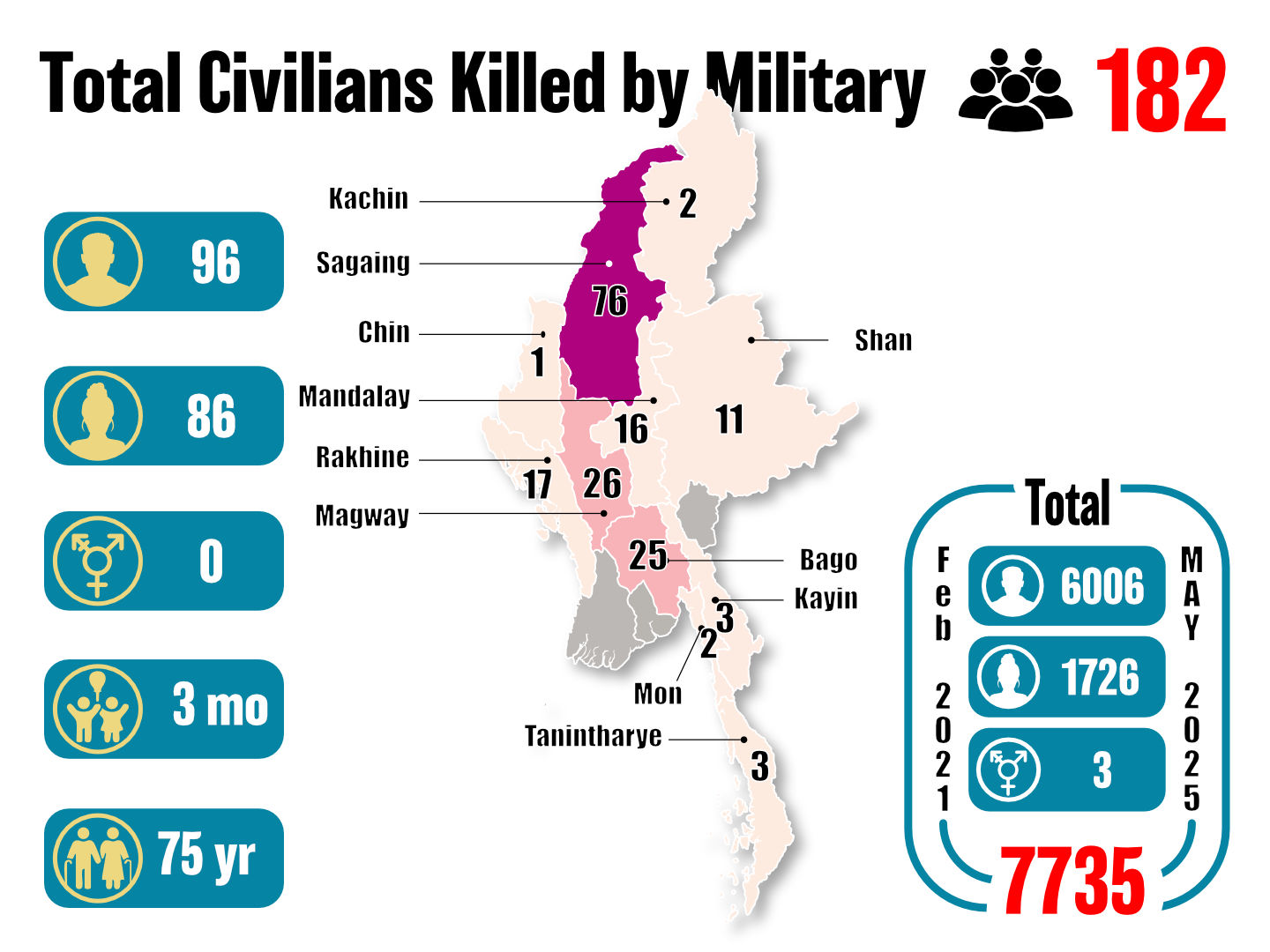
In May 2025, Myanmar’s military junta continued its campaign of deliberate attacks on civilians, deploying increasingly lethal tactics while systematically obstructing aid to earthquake-affected communities. The junta’s use of internationally banned cluster munitions on a school in Sagaing Region, killing 22 children and two teachers, was one of the deadliest single attacks on an education site since the 2021 coup and reflects a growing pattern of direct targeting of civilians and civilian objects in non-combat zones. Throughout the month, BHRN documented repeated junta airstrikes on schools, homes, weddings, monasteries, mosques, and displacement camps, as well as mass arbitrary arrests, enforced disappearances, and the denial of humanitarian assistance to those most in need.
The junta’s violence was mirrored by escalating abuses carried out by the Arakan Army (AA) in northern Rakhine State. In areas under AA control, Rohingya civilians were forcibly evicted, beaten, conscripted into forced labor, and denied access to medical care. Religious sites were confiscated or destroyed, and at least two deadly sea journeys were traced back to AA-perpetrated abuses that pushed Rohingya civilians to flee. Survivors described being extorted, assaulted, and left with no option but to attempt passage to Bangladesh. These actions form part of a growing body of evidence that the AA is systematically targeting the Rohingya population and committing crimes against humanity.
- Hits: 1012
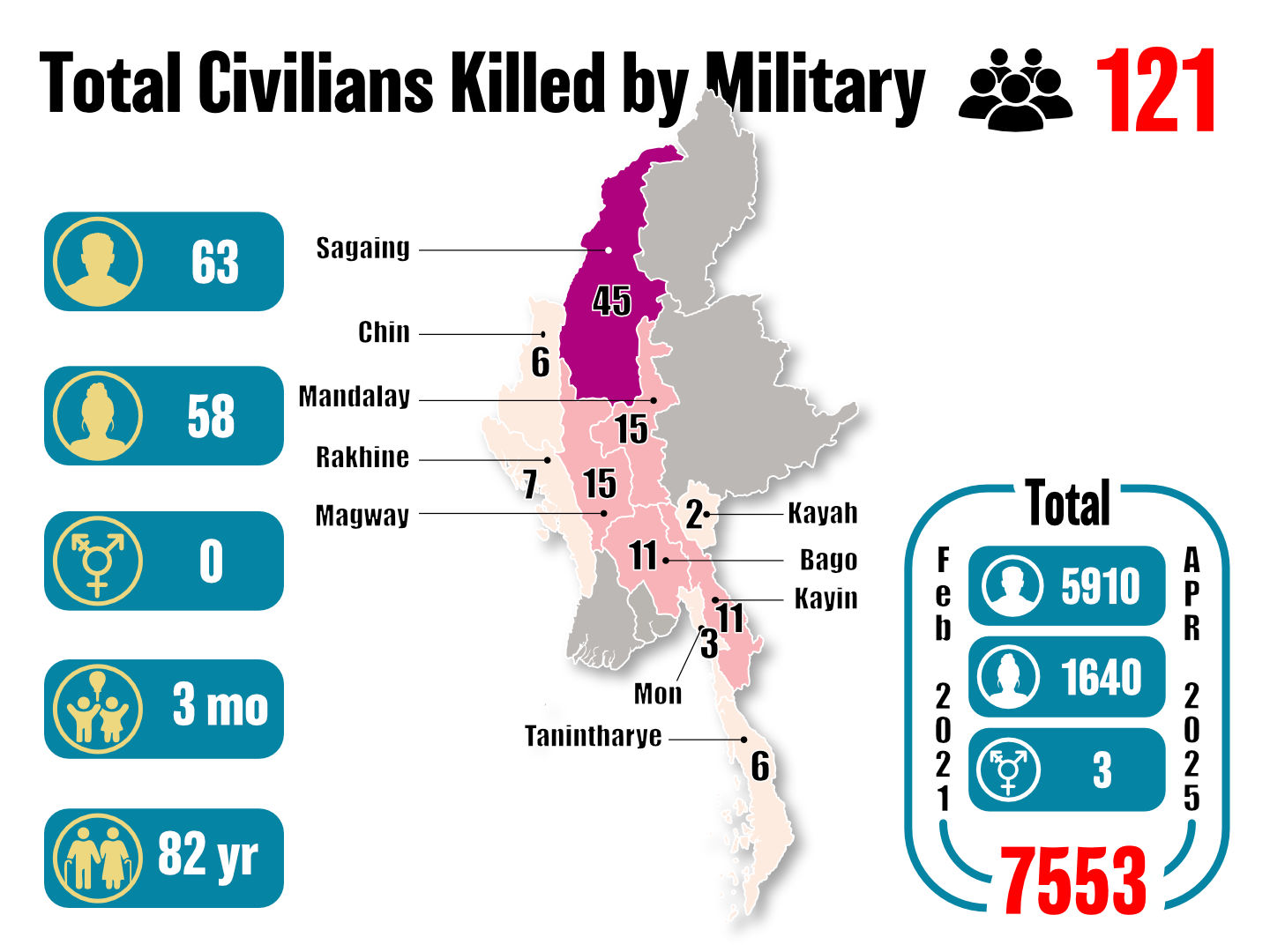
In April 2025, Myanmar’s military junta escalated its campaign of violence against civilians, compounding the suffering of communities already devastated by the 28 March earthquake. Instead of facilitating lifesaving relief, the junta used the disaster as cover to intensify aerial assaults, shelling, and ground raids across the country. Junta forces targeted crowded markets, religious sites, homes, and schools and killing children, elderly people, and entire families.
Despite publicly declaring a ceasefire on 2 April, the junta broke it within hours and continued to carry out operations that targeted civilians and obstructed humanitarian access. In disaster affected areas like Sagaing, Mandalay, and Chin States, airstrikes destroyed churches, monasteries, and shelters, while junta forces blocked aid deliveries and dismantled temporary mosques set up by displaced Muslim communities.
Rohingya communities faced renewed persecution, not only from the junta but also from the Arakan Army (AA), which continues to expand its control across Rakhine State. Throughout April, the AA carried out forced evictions, destroyed homes and places of worship, and ordered entire villages to relocate under threat. The silence of many regional and international actors in the face of these abuses further entrenches a dangerous pattern of selective accountability.
- Hits: 1692
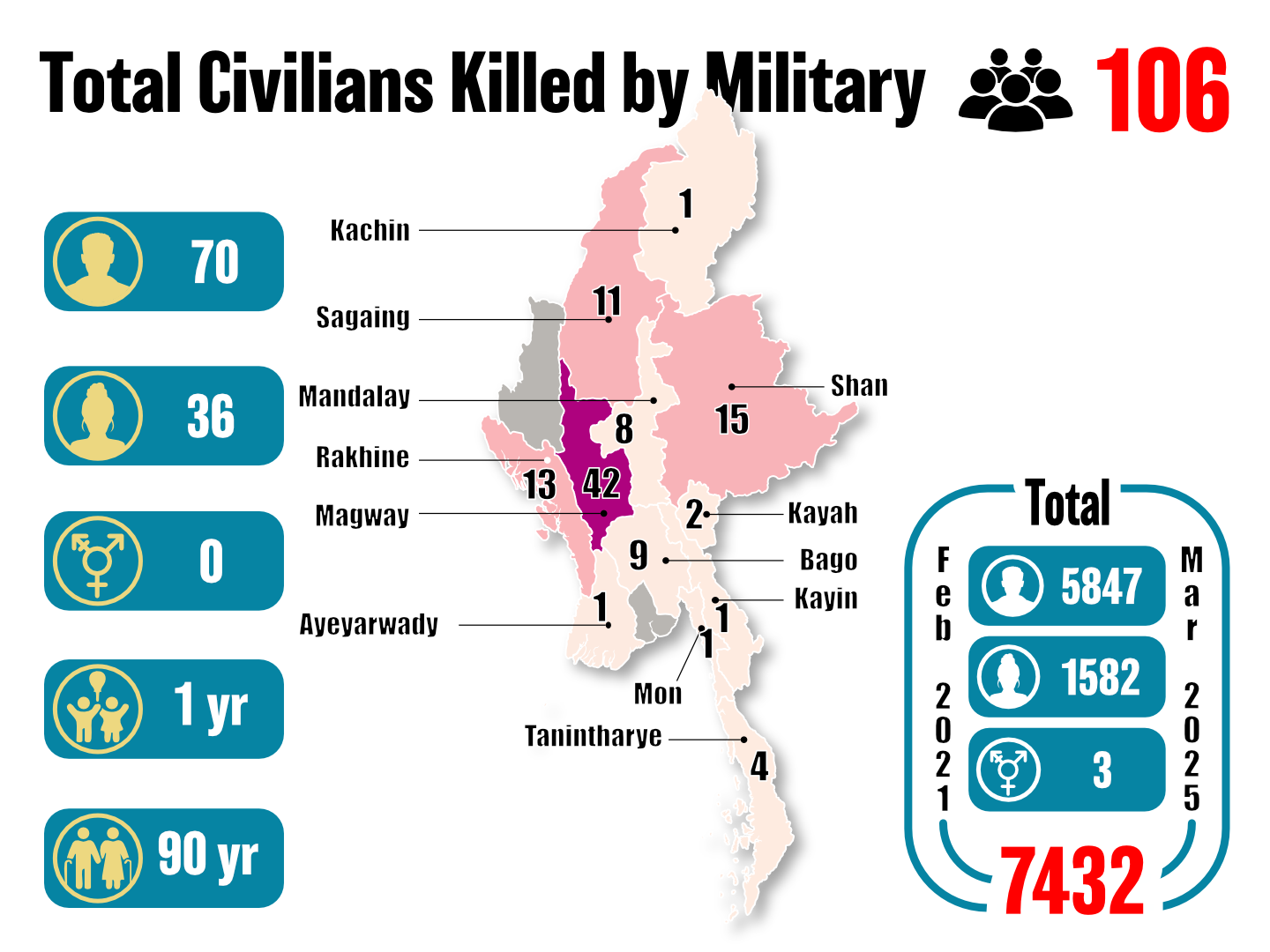
Myanmar’s military junta continued to terrorize civilians throughout March 2025, even as a devastating 7.7 magnitude earthquake struck the country. The disaster, which killed thousands and displaced tens of thousands more, was met not with aid but with obstruction: junta forces blocked humanitarian access, denied entry to earthquake affected opposition-held areas, and even launched fresh airstrikes on communities struggling to survive.
While pro-democracy forces declared ceasefires to facilitate relief efforts, the military pressed ahead with attacks in Sagaing, Bago, Magway, and Shan States. Junta air raids killed dozens of civilians and destroyed schools, homes, and religious buildings. Monasteries were bombed, clergy killed, and churches burned, part of a growing pattern of attacks on protected places and people.
- Hits: 2231
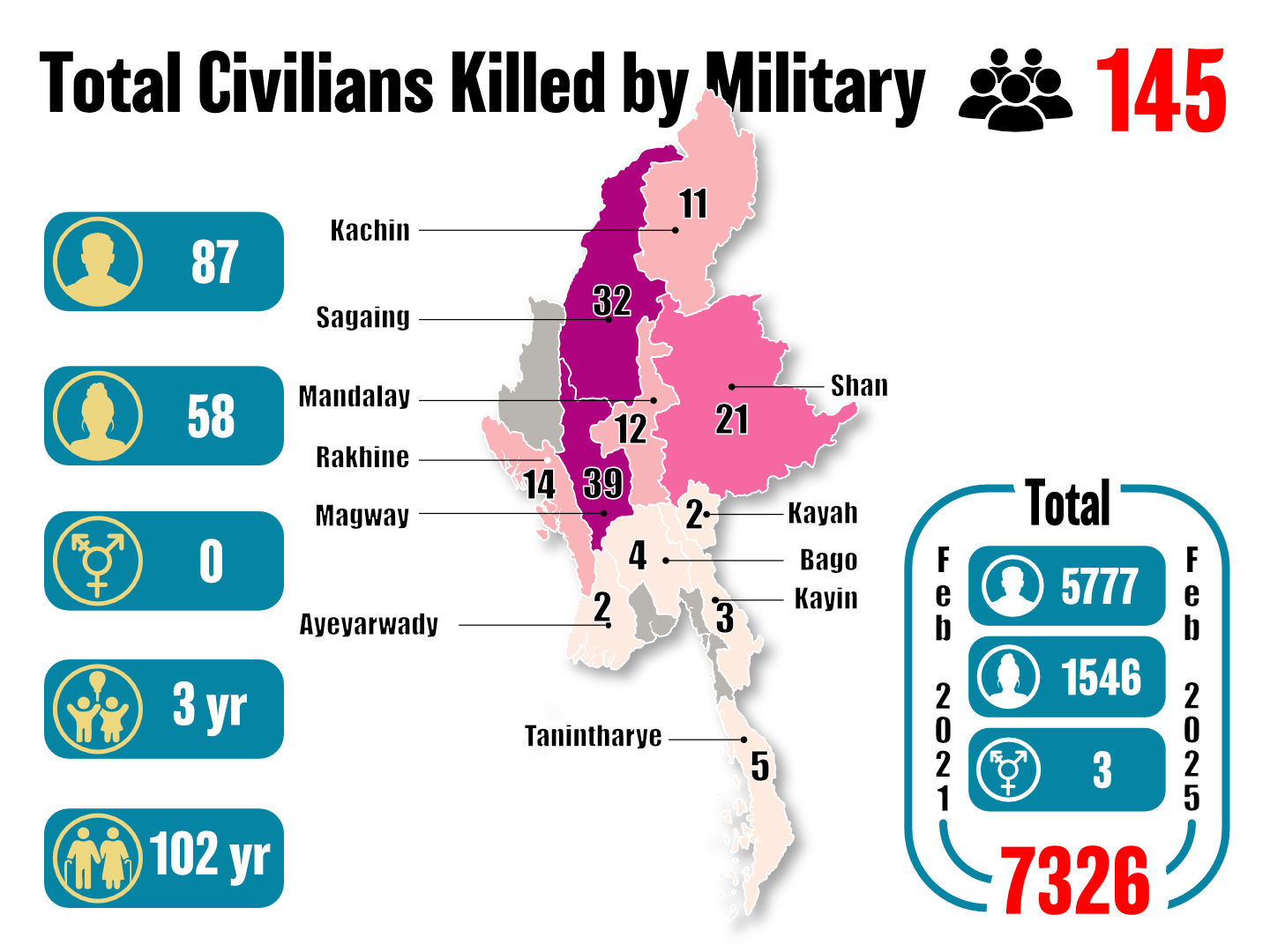
February 2025 marked a pivotal moment in Myanmar’s ongoing crisis, with significant legal and political developments, escalating armed resistance, and increasing human rights violations.
The Argentine court’s issuance of arrest warrants for Min Aung Hlaing and 24 senior military officials under universal jurisdiction represents a historic step toward accountability for the genocide against the Rohingya. This ruling follows the International Criminal Court (ICC) Prosecutor’s request for an arrest warrant in November 2024 and ongoing International Court of Justice (ICJ) proceedings in The Gambia v. Myanmar, which charges Myanmar with genocide. These cases mark a growing international effort to hold the junta accountable for atrocities committed against the Rohingya and other communities.
Read more: February 2025 - Summary of Monthly Situation Update
- Hits: 727
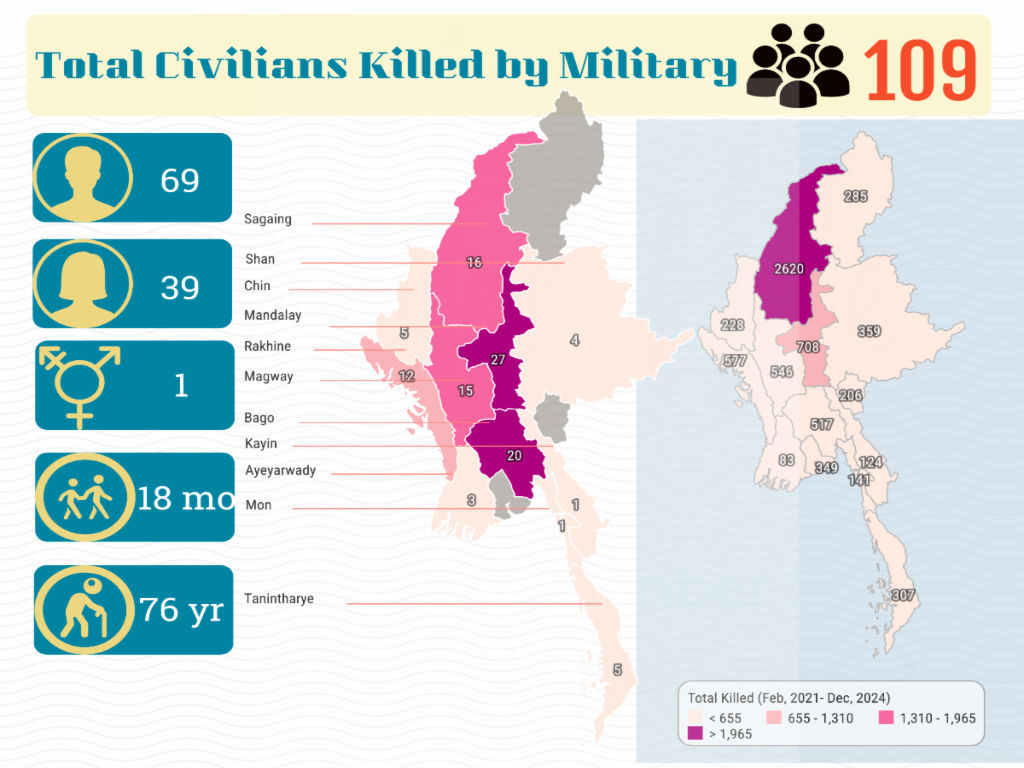
As the year 2024 winded down, the junta, under the leadership of its most destructive leader Min Aung Hlaing, faced the most humiliating defeats in its 83 years of existence.
The junta has lost two of its military headquarters and the entire Northern Shan State as well as its Western military headquarters and almost all townships in Rakhine. Also, the entire Chin states, on the Indian border to the hands of ethnic resistance groups.
Added to the junta’s woe is an arrest warrant issued against Min Aung Hlaing by the International Criminal Court (ICC) last November after the court found the junta head bears criminal responsibility for the crimes against humanity of deportation and persecution of the Rohingya, committed in Myanmar, and in part in Bangladesh.
In several instances during the year, many of the junta’s top senior military officers up to the rank of general were captured by the ethnic groups and they were paraded in front of the media. Despite these humiliations for the Myanmar military, Min Aung Hlaing survived yet another year as the head of the regime and the Myanmar military. It tends to indicate that the junta is likely to be untied until its last day and likely to crumble if its leader flees the country like in a recent incident in Syria.
Even though the junta’s defeat is welcomed across the country, however, human suffering associated with the conflict is immense, according to some estimates more than 3 million civilians are displaced due to the conflict and nearly 15 million are in need of urgent humanitarian assistance.
Naturally, the events that unfolded in Myanmar are shocking for the international community, especially for its neighbours China, India, Thailand, and Bangladesh.